
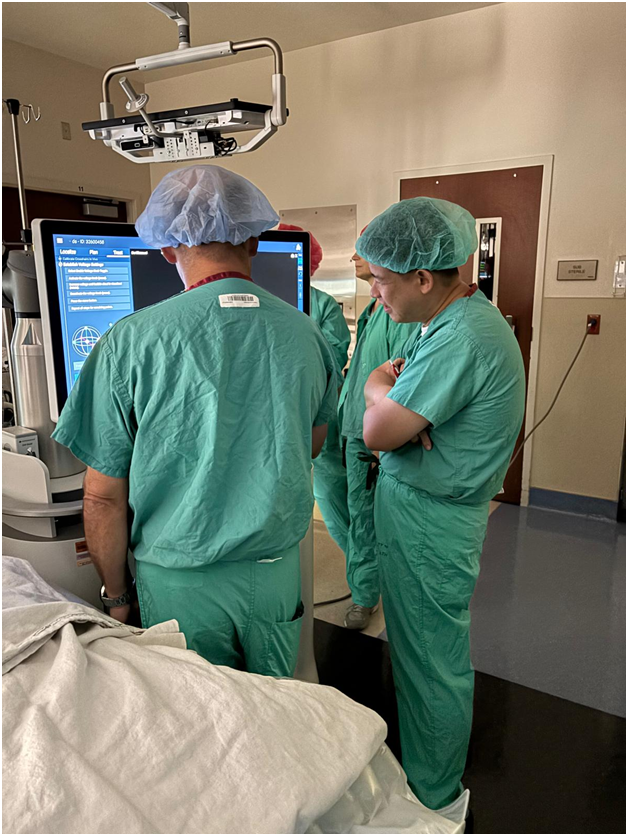
Dr. Sucandy Brought a NEW Non-Invasive Liver Tumor Treatment – HISTOSONIC/HISTOTRIPSY to Tampa Bay
The need for liver tumor treatment is increasing in the past five years due to improvement in systemic chemotherapy and discovery of new immunotherapy for patients with primary and metastatic liver tumors. Historically, colorectal liver metastasis was considered a nonsurgical disease until a randomized clinical trial confirmed a significantly longer overall survival in patients who undergo liver resection. Without liver resection, 5 year overall survival was less than 5% with systemic chemotherapy alone. When liver resection is added to the treatment, the 5-year overall survival increases to 65%. Hepatic resection then became a standard of care for patients with liver metastasis originating from colon and rectum. Similarly, pancreatic and intestinal neuroendocrine tumors are now considered surgical diseases with significantly improved overall survivals in patients who undergo hepatic tumor resection. With tumor resections, the overall survival triples, and many of these patients with metastatic neuroendocrine tumors were in fact able to reach 20 years of survival after their diagnosis.
Similar to these scenarios, primary liver tumors such as hepatocellular carcinoma and intrahepatic cholangiocarcinoma (bile duct cancer within the liver) also demonstrate excellent survival outcomes after liver resection. In patients with adequate liver function and minimal cirrhosis, liver resection is the Goldstandard of care. The recent addition of newer chemo-and immunotherapy provides further opportunity to achieve tumor resection by initial downstaging and treatment of extrahepatic disease. As systemic treatment continues to evolve, more patients become eligible for liver tumor resection. The advent of robotic surgery also plays a major role in expanding pools of patients eligible for liver resection by reducing postoperative complications and shortening their recovery.
As our population age, however, more patients suffered from liver tumors present with significant health conditions and associated medical comorbidities. Cardiopulmonary diseases, vascular thromboembolism, neurological conditions such as stroke or parkinsonism, and recurrent abdominal cancers requiring multiple open operations, cumulatively create challenges and limitations to liver surgery, even using robotic surgery method. Histosonic came with a new ultrasonic technology to destroy liver tumors without surgery. This method of treatment is also known as Histotripsy. Under general anesthesia,this modality is able to induce controlled acoustic cavitation within the liver tumors leading to mechanical lysis of cell membranes. The ability to select tissue targets allows surgeons such as Dr Sucandy to treat solid tumor smaller than 4cm without negatively affecting any of the surrounding normal liver tissues. Since this treatment does not require any incisions, the liver tumor treatment can be easily performed in conjunction with administration of systemic chemotherapy and oral anticoagulation such as warfarin or direct factor X inhibitors. With a collaborative help from hospital administrators and AdventHealth Tampa Foundation, Dr Sucandy and his team was be able to offer this non-invasive Histosonic treatments to patients in Tampa Bay area. Other metastatic liver tumors such as pancreatic cancer, breast cancer, kidney cancer, ovarian cancer, and sarcoma will also be able to be treated in a palliative way by Dr Sucandy and his team.
Dr. Sucandy and his team are following all patients who are treated with Histosonic/histotripsy to ensure excellent local tumor control and good long-term overall cancer survival in comparison with the standard hepatic resection using robotic technique. The Histosonic treatment complements our currently available liver tumor treatments using robotic liver resection, stereotactic body radiation (SBRT), thermal ablation/microwave ablation, transarterial chemoembolization (TACE), radioembolization using Y-90, Hepatic artery infusion pump (HAIP), and liver transplantation.
