
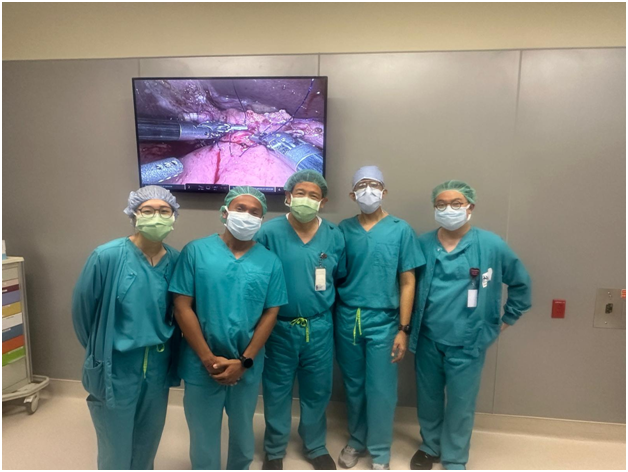
Prof. Dr. Sucandy Speaks at Prestigious Americas Hepatopancreatobiliary Surgery Association 2026 Meeting
Americas Hepatopancreatobiliary Surgery Association (AHPBA) is an international surgery society for North and South American countries/regions dedicated to improving Science and Outcomes of patients with Liver, Pancreas, and biliary diseases, including thoseneeding liver transplantation. AHPBA is one of the most prestigious surgery society in the world with approximately 2000 active members. Annually, high-level scientific meeting is held in Miami to gather surgeons and trainees from the continents of Americas and beyond to share latest development in the field of Hepatopancreatobiliary Surgery. All pioneers in each organ attend this meeting to share their experience and knowledge to improve outcomes of liver cancer, pancreatic cancer, biliary cancer, and liver failure treatments, through single institutional, multicenter studies, or randomized clinical trials.
As a renown expert in the field of robotic Liver, biliary, and pancreas Surgery, Prof Dr. Sucandy was kindly invited to share his knowledge, latest and most modern surgery techniques, as well as how to optimize outcomes of biliary cancer surgery using robotic technology. In the past decade, Dr. Sucandy had developed and applied robotic surgery to treat perihilar cholangiocarcinoma, the most difficult type of bile duct cancer located near the center of the liver. This is also known as Klatskin’s tumor. Historically, Klatskin’s tumor operation can only be undertaken via open operation until a decade ago when Dr Sucandy and his team started to revolutionize this field of surgery. The proximity to hepatic artery and portal vein make this operation very challenging both technically and oncologically. A high tendency of vascular and nodal invasion lead to the need to perform vascular resection together with biliary reconstruction in up to 30% of cases. Today, Dr Sucandy has performed more than 60 of these operations with excellent outcomes and more standardized techniques. Clinical outcomes had been published in various journal for other surgeons to read and learn from.
In his lecture, Prof. Dr Sucandy shared many technical tips and tricks in performing this operation and how to safely manage intraoperative complications. In complex robotic surgery like this, a small mistake in vascular handling can lead to massive bleeding and severe complications including liver ischemia, liver failure and ultimately death. Proficiency and mastery in robotic pancreatic head operation and robotic major liver resection are crucial to build-up skillsets for this operation. The proper use of robotic vascular clamps was also shared with hundreds of audience at the 2026 AHPBA meeting. Dr. Sucandy showed how to handle left portal vein bleeding while dissecting tumor off of this structure. At the end of the session, a major center in Europe with clinical experience performing open Klatskin’s tumor resection asked Dr Sucandy to proctor their robotic team to accomplish this operation and navigate the learning curves.
Today, Dr. Sucandy continues to be the referral center for perihilar cholangiocarcinoma surgery in Tampa Bay area and Southwest Florida. Many patients come from >200 miles away for this treatment since the majority of surgical oncologists in the area do not have clinical experience and support to treat this difficult disease. It is important to work with an experienced surgeon with strong team to achieve best results in biliary tract cancers. The advent of new drugs such as chemo and immunotherapy brings hope for resectability to many patients who are in fact initially deemed to be incurable. A multidisciplinary treatment approach is mandatory to achieve best outcomes under the guidance of liver surgeon.
